
Muse Dash Screenshots



Muse Dash review
Dive into the Beat with Adorable Muses and Endless Challenges
Hey there, rhythm lovers! Have you ever dashed through candy corns and robot foes while jamming to J-pop bangers? That’s Muse Dash for you – the addictive side-scrolling rhythm game from PeroPeroGames that blends parkour action with perfect beats. I remember my first run as Rin, bass guitar swinging, heart pounding to the music as enemies flew in sync. With three charming muses, 97+ songs across genres, and difficulties from easy to master, it’s a thrill for newbies and pros alike. Stick around as I share insider tips, personal stories, and strategies to unlock every secret in this cute chaos.
What Makes Muse Dash Gameplay So Addictively Simple?
Ever picked up a rhythm game and felt like you needed a four-year degree just to understand the tutorial? 😅 I have. My first attempt at a certain plastic guitar simulator left me fumbling, overwhelmed by five colored lanes and a barrage of notes. Then I found Muse Dash gameplay, and it was a revelation. It took that frantic, heart-pounding joy and distilled it into something beautifully pure. The core muse dash mechanics are so elegantly simple that you’ll be tapping along within seconds, yet the depth they hide is what will keep you playing for hours. This isn’t just hitting notes; it’s a high-speed parkour dash through a musical wonderland, and understanding the rules of the run is your ticket to the top of the leaderboards. Let’s break down exactly how to play Muse Dash and why its simplicity is its greatest strength.
How Do You Control Your Muse and Build Massive Combos?
At its heart, the genius of Muse Dash controls is their brutal simplicity. You have two actions: attack on the ground and attack in the air. That’s it. Whether you’re using the D-pad on a controller, the X and C keys on a keyboard, or simply tapping and holding on a touchscreen, the principle remains beautifully consistent.
- Ground Enemies (and obstacles!) require a ground hit.
- Airborne Enemies require an air hit.
- Long, holding notes require you to keep the button pressed or finger held down.
Your character auto-runs through these dreamy, music-synced levels, and your only job is to hit every note that comes your way. There are no colored lanes to track—just the rhythmic placement of enemies, projectiles, and obstacles directly in your path. This non-color-coded approach is a huge part of the Muse Dash gameplay charm, as it focuses your brain entirely on timing and position, not on decoding complex charts. You feel the music, you hit the beat. It’s instinctive.
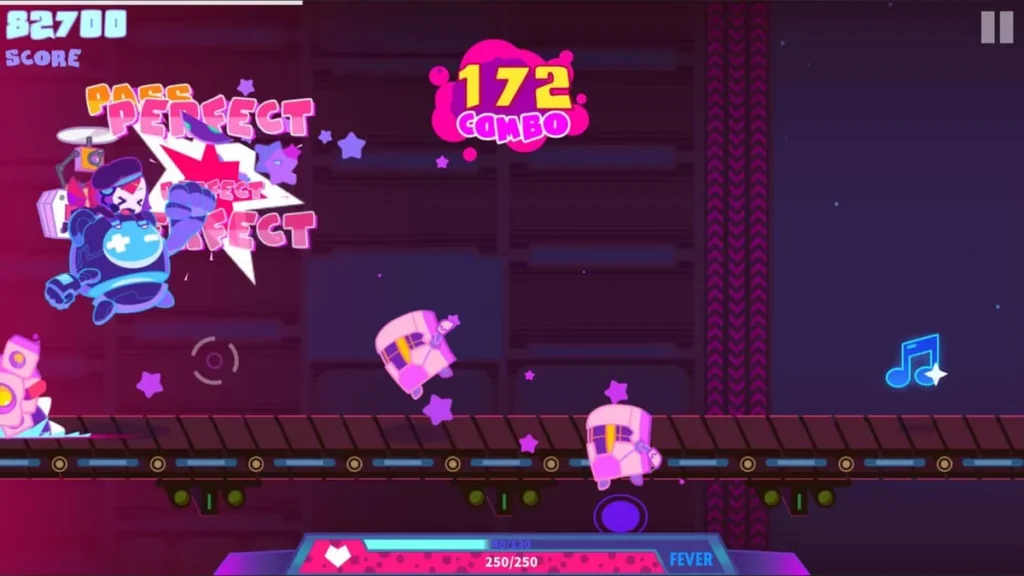
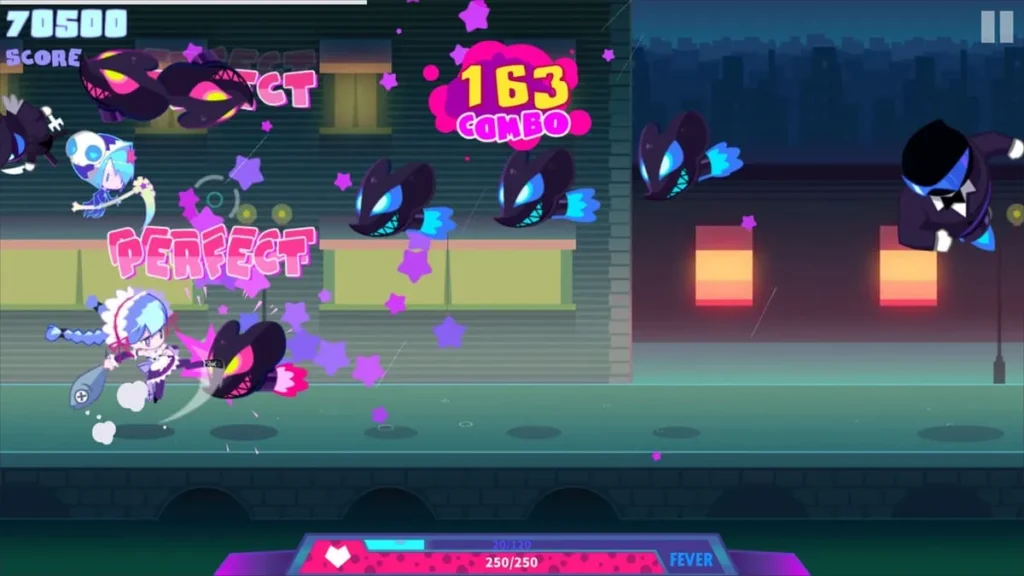
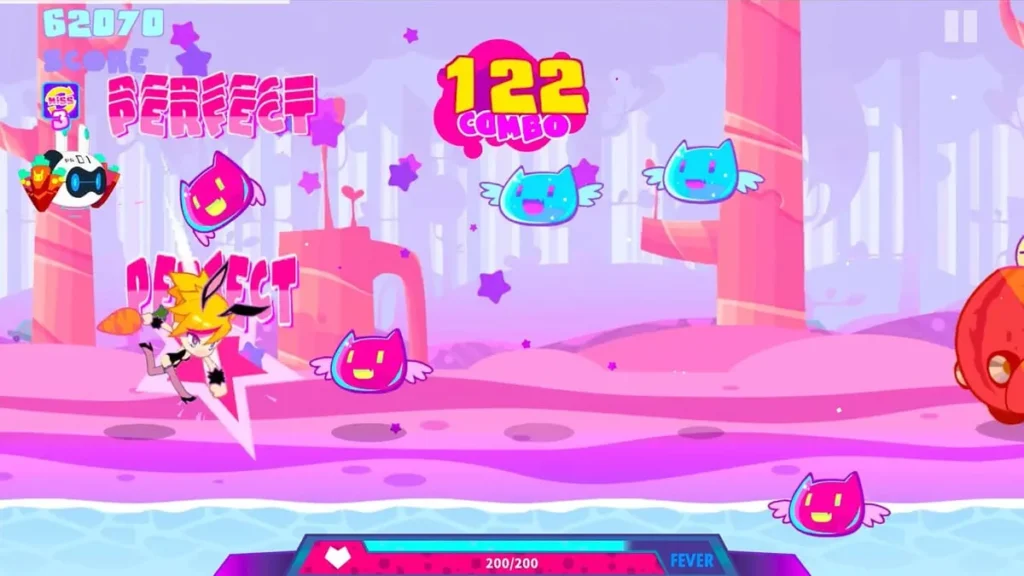
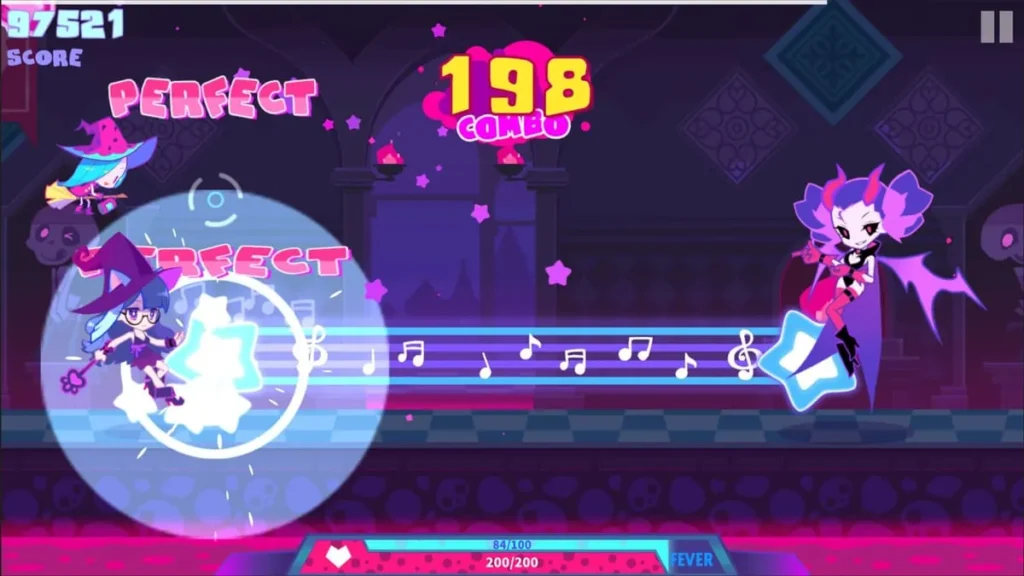
Now, about those muse dash combos—this is where your score explodes 🚀. Every successful hit adds to your combo counter. Miss a note, get hit by an obstacle, or let go of a hold note too early, and your combo resets painfully back to zero. This simple risk-reward system is incredibly motivating. Watching that combo number climb creates a thrilling tension. You’re not just trying to clear a song; you’re trying to achieve a perfect run. I remember my first attempt at the boss of “Brain Power.” I was so focused on survival that my combo was a tragic mess. But on the retry, knowing the pattern, I locked in. Seeing that combo counter tick up into the hundreds as I perfectly parried every laser was a rush unlike any other. It transformed the song from a challenge into a personal victory lap.
Unlocking Fever Mode: My Top Tips for Epic Runs
If combos are the score multiplier, then Fever Mode muse dash is the nitro boost. This is your key to truly epic, high-scoring runs and a crucial mechanic to master. Activating it feels fantastic and gives you a major strategic advantage.
Fever Mode is charged by hitting the special, sparkling “Fever” notes scattered throughout every track. Once your Fever gauge is full, you can activate it manually (with a third button or by a double-tap/swipe, depending on your control scheme). When active, it typically grants you a period of invincibility and a massive score bonus. Timing its activation is a skill in itself.
My pro-tip? Don’t just activate Fever as soon as it’s ready! Look ahead. Save it for the most dense, chaotic sections of the song where you’re most likely to drop your combo or take damage. Popping Fever right before a brutal drum solo or boss attack pattern turns a potential disaster into a point-scoring paradise.
Also, pay close attention to the long, holding notes. Not only are they essential for keeping your combo alive, but they often appear in sequences that perfectly fill your Fever gauge. Aim for these sections aggressively. On the Nintendo Switch version, I found the touch controls to be particularly intuitive for these sustained notes, letting me hold one lane while still being ready to tap the other.
Mastering the flow between standard muse dash gameplay and strategic Fever Mode muse dash activation is what separates good players from the great ones. It turns a reactive experience into a proactive performance.
Mastering Easy, Hard, and Master Difficulties Like a Pro
One of the most clever aspects of Muse Dash gameplay is how it scales. The simple two-action control scheme remains constant, but the muse dash difficulties completely transform the experience. You’re not just playing the same song faster; you’re playing a different, more complex chart.
- Easy (4-7 Level): This is your playground. The patterns are forgiving, perfect for learning a new song’s rhythm, enjoying the story scenes, or just chilling. Don’t underestimate it as a practice tool—it establishes the fundamental “map” of the track.
- Hard (7-10 Level): The “true” game for most players. Here’s where the muse dash mechanics really sing. Enemy patterns become intricate, requiring precise jumps and hits. Obstacles are placed with devilish timing. This is the difficulty where you’ll spend most of your time honing your skills and chasing those full combos.
- Master (11+ Level): Pure, unadulterated chaos. 🤯 This is for the rhythm game deities. Notes come at a blistering pace, often with deceptive patterns that will test your reading and reflexes to the absolute limit. Clearing a song on Master is a badge of honor.
Your progression is tied directly to these difficulties. Playing songs earns you EXP, and leveling up unlocks a torrent of new tracks, adorable character skins, and helpful Elfin companions. You can also tackle specific in-game feats (like “Achieve a 150 combo” or “Score over 800,000 on this song”) for bonus EXP. My advice? Start on Easy to feel the music, move to Hard to challenge yourself, and occasionally peek at Master to see what insanity awaits. Each playthrough on a higher difficulty feels like discovering a whole new song hidden within the same melody.
To see the stark difference at a glance, here’s how the tiers break down:
| Difficulty | Enemy Speed & Density | EXP Gain | Best For |
|---|---|---|---|
| Easy | Slow, simple patterns | Good for new songs | Learning, relaxing, enjoying visuals |
| Hard | Fast, complex patterns | High (primary source) | Core challenge, score chasing, unlocking content |
| Master | Extreme, relentless patterns | Highest (bonus for clearing) | Ultimate challenge, leaderboard dominance |
The journey through these muse dash difficulties is incredibly rewarding. That song you barely survived on Hard yesterday becomes a song you can consistently combo today. This constant, tangible improvement is the secret sauce of the Muse Dash gameplay loop. It’s easy to learn, but with a mountain of mastery to climb, one adorable, music-filled step at a time.
Your Muse Dash Mechanics FAQ 🎵
What breaks my combo?
Missing an enemy note, getting hit by an obstacle (like a low ceiling or projectile), or releasing a long hold note too early will instantly reset your combo back to zero.
How do I activate Fever Mode?
Fill the Fever gauge by hitting the sparkling pink notes, then activate it with the dedicated button (often the third key or a double-tap/swipe). Timing it for tough sections is key!
Can I play without buttons?
Absolutely! The touch controls on supported platforms (like iOS, Android, and Nintendo Switch) are excellent. You tap the bottom for ground attacks and the top for air attacks, making it very intuitive.
What’s the best way to improve?
Start on Easy to learn the song’s layout, then move to Hard. Use practice mode for tough sections, and always, always try to aim for those long notes to charge your Fever gauge faster.
There you have it – Muse Dash is the ultimate rhythm rush with its charming muses, pulse-pounding tracks, and skill-building challenges that keep you coming back. From my late-night sessions grinding levels as Buro to unlocking secret songs like XODUS, it’s pure joy in every beat. Whether you’re dodging obstacles or chasing perfect scores, this game turns practice into passion. Grab your platform of choice, pick your muse, and dash into the music today – your next high score awaits! What’s your favorite track? Drop it in the comments and let’s jam together.