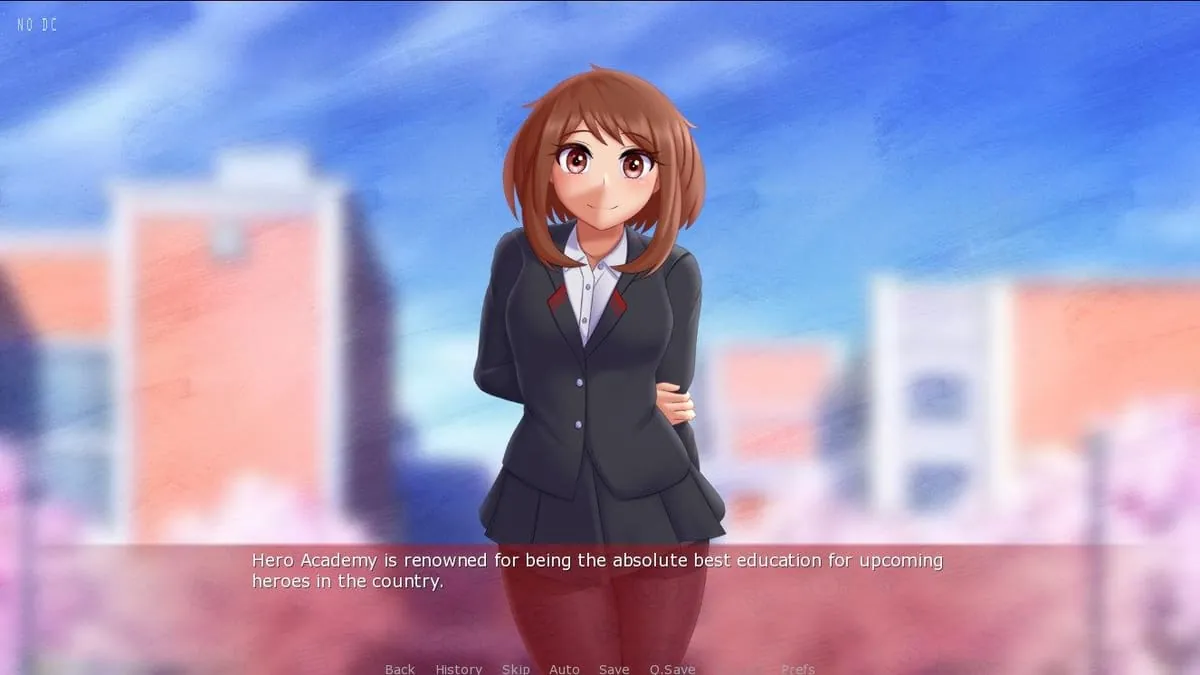
Crimson High
Play Crimson High
Crimson High review
An in-depth, player-focused walkthrough and analysis of Crimson High
Crimson High is a narrative-driven adult visual novel game centered on branching choices, character relationships, and episodic chapters — this guide walks you through everything a prospective player or returning fan needs to know. In the opening paragraphs I share why I first played Crimson High, what hooked me (its character writing and branching structure), and what readers can expect from this article: a practical walkthrough, character analysis, tips for unlocking scenes, and notes on pacing and updates. Whether you’re trying to decide if you should play or looking to get more from your current playthrough, this piece is written from a player’s perspective and includes personal anecdotes to make the guidance practical and relatable.
Gameplay & Structure of Crimson High
Welcome to Crimson High! 🏰 If you’re here, you’re probably ready to dive into its gorgeous, gothic halls and unravel its mysteries. But before you get lost in the story, it’s crucial to understand how this visual novel actually works. The Crimson High gameplay is all about player agency, where your decisions truly craft a unique narrative. This chapter will break down the game’s structure and mechanics, giving you the tools to experience everything it has to offer—without the frustration. Think of this as your roadmap to mastering the game’s branching routes Crimson High is famous for.
How Crimson High’s chapters and routes work
At its heart, Crimson High is an episodic, character-driven story. The game is divided into Crimson High chapters, which act like episodes in a TV season. Each chapter typically covers one in-game week, blending daily life at the mysterious academy with deepening plot threads and character moments. 📚
Where it gets fascinating is the route system. After a common introductory chapter, the story begins to split based on your choices and relationships. You’re not just picking a love interest; you’re aligning yourself with a faction or a core mystery. The main branching routes Crimson High offers include the Loyalist path (aligning with the student council), the Rebel path (siding with the underground club), and the Independent path (pursuing solo truths). Each route contains scenes and information you simply won’t see on the others.
My first playthrough was a mess—a wonderful, surprising mess. I stumbled onto the Rebel path purely by following my gut, and it was a blast. But I had no idea I’d missed entire chapters of content! That’s the beauty and depth of the Crimson High gameplay structure. Chapters aren’t just linear; they are flexible containers that change their content based on the route flags you’ve triggered. One player’s Chapter 4 might be a tense ballroom negotiation, while another’s is a secret midnight investigation in the library catacombs.
Core mechanics: choices, relationship meters, and saves
The engine of this whole experience is the choice system. Crimson High choices appear deceptively simple—often just two or three dialogue options—but their impact is profound. They don’t just affect the immediate conversation; they adjust hidden relationship values and set invisible “flags” that determine future scene availability.
You have two primary meters to watch: Affinity and Trust. Affinity is your general like/dislike score with a character, while Trust is a more fragile metric about whether they believe in your judgment. 🫀 A choice might give you +2 Affinity with one character but -1 Trust with another. Sometimes, you need high Trust to access a crucial piece of evidence, while high Affinity is needed for more personal, character-specific scenes.
This is where save management Crimson High becomes your most vital skill. The game gives you plenty of save slots—use them all! Relying on a single auto-save is a recipe for having to replay hours of content. Your saves are the keys to different doors in the story.
Here’s a practical table to turn you into a save-scumming pro (and I mean that in the best way!):
| When to save | Why | How many slots |
|---|---|---|
| At the very start of a new chapter | This is your “chapter master” save. You can always jump back here to try a different major choice without replaying from the very beginning. | 1 dedicated slot per chapter |
| Before any choice that feels significant | Dialogue about beliefs, offers to help, or decisions to go somewhere. These are often soft branch points. | 2-3 rotating slots |
| Immediately after a major story reveal or event | In case you want to replay a favorite scene or if the path you’re on locks you out of content you later want to see. | 1 dedicated slot |
| When a character’s meter is nearly full or empty | To experiment with maxing out a relationship or seeing the consequences of a fallout. | 1-2 rotating slots |
I learned this the hard way! On my first run, I made a flippant comment to the stoical council president in Chapter 3. I didn’t think much of it, but it dropped my Trust with her just below a hidden threshold. Later, in Chapter 6, I was completely locked out of a scene that explained a huge part of the backstory. I had to go back three hours of gameplay because I hadn’t saved before that “small” choice. Now, I save like a paranoid historian documenting every step.
Player experience: pacing, unlocks, and replay value
The Crimson High gameplay loop is designed for multiple playthroughs, but that doesn’t mean your first run should feel incomplete. The pacing is excellent, with each chapter ending on a revelation or cliffhanger that makes you crave the next. To avoid burnout, I recommend treating each chapter like an episode—play it in one sitting, let the choices sit with you, and maybe take a break between chapters to digest. This makes the story feel more impactful and helps you spot foreshadowing. ☕
A huge part of the fun is unlocking new content. How to unlock routes Crimson High isn’t always about one big choice. It’s often a cumulative effort. For a recommended early-game strategy: keep your options open. In Chapters 1-3, try to avoid extreme negative reactions with any major character. Spread your attention a bit. This ensures you don’t get “hard-locked” out of a route too early. A soft lock means you can still course-correct with a few favorable choices; a hard lock slams the door shut. You can often identify a soft lock if characters are still talking to you but seem cool, while a hard lock is signaled by a dramatic, “I have nothing more to say to you,” scene.
The replay value is staggering. New playthroughs aren’t just about seeing a different love story; they’re about assembling the full truth of Crimson High’s central mystery. Scenes you thought were innocuous on one route become loaded with dramatic irony on another. To maximize your efficiency, here are my top three Crimson High replay tips for increasing scene variety quickly:
- Use the “Skip Read Text” feature aggressively. The game lets you fast-forward through text you’ve already seen. On a new route, keep this on until you hit a choice you previously didn’t take, or the narrative clearly diverges. This saves so much time.
- Pursue the opposite character metrics. If you maxed out Affinity with the alchemist on your first run, purposefully annoy them on your second. You’ll be shocked at how different their scenes and dialogue become.
- Check the “Scene Gallery” after each chapter. It shows you how many scenes you unlocked in that chapter. If you see “4/7,” you know you missed almost half the content! Use that as a guide to reload a save and explore a different choice.
Ultimately, the structure of Crimson High is a gift to the curious player. It respects your time by making every choice feel meaningful and rewards your investment with a tapestry of interconnected stories. By understanding its chapters, managing your saves wisely, and embracing the replay, you transform from a passive reader into an active archaeologist, piecing together the academy’s deepest, darkest secrets. Happy investigating! 🔍
Crimson High offers a layered branching experience where choices shape character routes, pacing, and replay value; mastering save management, reading relationship cues, and prioritizing narrative-friendly choices will significantly improve your playthroughs. I recommend starting with a single focused route to learn core mechanics, then using careful save discipline to explore alternate outcomes. If you enjoyed this guide, try the suggested tips and come back to compare notes—your insights help the community and make future playthroughs more rewarding.